Utilizing 304 Stainless Steel Drum Pumps in the Pharmaceutical Industry
In the pharmaceutical industry, every step of material transfer directly impacts the final product's quality, safety, and regulatory compliance. Traditional transfer methods often present challenges such as cross-contamination, difficult cleaning of residues, and low efficiency.
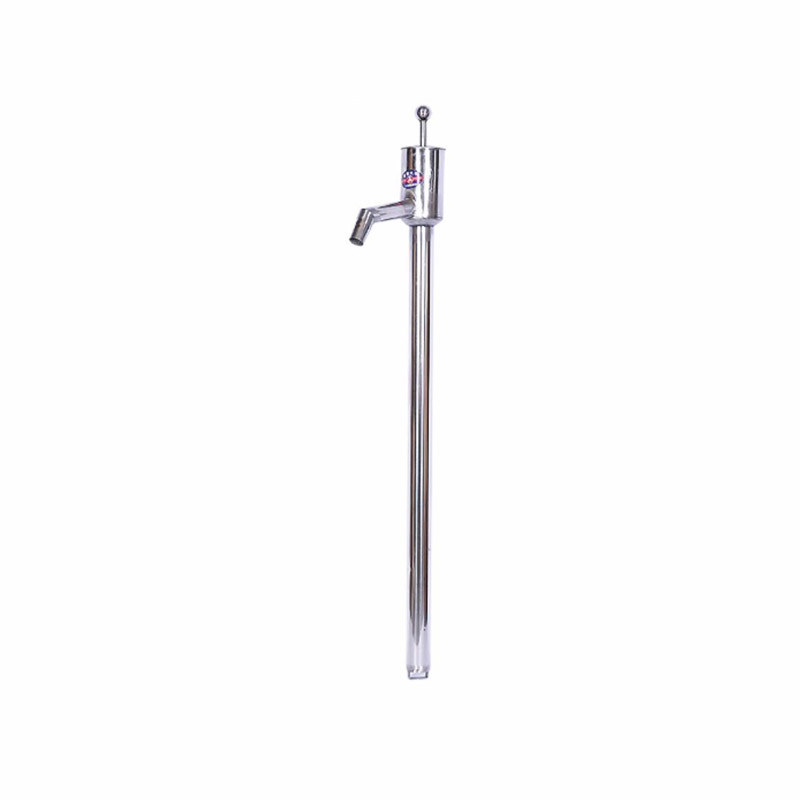
304 Stainless Steel Drum Pumps
, as an efficient, sanitary, and reliable fluid transfer solution, are increasingly becoming a strategic choice for pharmaceutical companies to optimize processes and ensure compliant production.
I. Why Does the Pharmaceutical Industry Favor 304 Stainless Steel Drum Pumps?
-
Superior Material Compliance and Safety
-
GMP Compliance : 304 stainless steel (06Cr19Ni10) is an austenitic stainless steel whose chromium-nickel content provides excellent corrosion resistance. It is free from trace elements (e.g., copper, zinc) that could potentially contaminate pharmaceuticals. Its surface is smooth and non-porous, resisting material adhesion and microbial growth, fully meeting the core GMP requirements for equipment materials to be "smooth, even, easy to clean or disinfect, and corrosion-resistant."
-
Broad Media Compatibility : Capable of safely transferring the vast majority of solvents, active pharmaceutical ingredient (API) solutions, buffers, cleaning agents (e.g., CIP/SIP solutions), and high-purity water used in pharmaceutical processes, without chemical reaction or leaching.
-
-
Contamination-Free Design and Excellent Cleanability
-
No Dead-Leg Construction : Professionally designed drum pumps feature a simple structure. Product-contact parts (pump tube, impeller, seal area) are easily disassembled and allow complete drainage, significantly reducing residue and the risk of batch-to-batch cross-contamination.
-
Supports CIP (Clean-in-Place) & SIP (Sterilize-in-Place) : High-quality 304 stainless steel drum pumps can withstand high temperatures, pressure, and aggressive cleaning/sterilizing agents. They can be easily integrated into automated CIP/SIP systems, ensuring hygiene standards are met for stringent sterile or potent compound production.
-
-
Efficient and Controlled Transfer Process
-
Precise Metering and Transfer : Compared to siphoning or pouring, drum pumps enable fast, controlled liquid transfer, minimizing product waste and exposure time, thereby improving yield and production efficiency.
-
Operator Safety : When handling irritating, toxic, or high-value materials, the enclosed or semi-enclosed pumping process effectively reduces vapor release and personnel exposure, enhancing occupational health and safety (EHS) standards.
-
II. Specific Application Scenarios in the Pharmaceutical Industry
-
Active Pharmaceutical Ingredient (API) Manufacturing : Precisely transferring organic solvents, intermediates, or API solutions from mobile containers (IBC totes, standard drums) to reactors, crystallizers, or filter systems.
-
Formulation & Fill/Finish : Transferring medicinal solutions, syrups, suspensions to mixing tanks or filling lines; transferring excipients like wetting agents, binders.
-
Laboratories & R&D Centers : Precise transfer of small-batch, multi-variety materials, suitable for research, pilot-scale trials, and QC sampling.
-
Cleaning & Sanitization : Dispensing and circulating cleaning agents and sanitizers (e.g., Water for Injection (WFI), Purified Water (PW), acid/base solutions) for equipment and line cleaning.
-
Waste Collection : Safely and efficiently collecting process waste liquids into designated containers.
III. Key Considerations for Selecting a 304 Stainless Steel Drum Pump in Pharma
To meet the specific needs of the pharmaceutical industry, focus on these points when selecting a drum pump:
-
Surface Finish : Product-contact surfaces should achieve a specified Ra value (e.g., Ra ≤ 0.8 μm) to facilitate cleaning and prevent microbial harborage.
-
Sealing Technology : The choice between mechanical seals or magnetic drive seals depends on the hygiene class and sterility requirements. Magnetic drive (seal-less) pumps eliminate leakage risk entirely, ideal for high-standard applications.
-
Certifications & Documentation : Suppliers should provide material certificates (e.g., 3.1 material cert), statements of compliance with relevant regulations like FDA 21 CFR 178.3570, and comprehensive documentation to support cleaning validation (e.g., DQ/IQ/OQ templates).
-
Traceability : All product-contact parts should have full traceability.
IV. Advantages of Partnering with a Source Manufacturer for Customization & Service
As a professional source manufacturer of fluid handling equipment, we understand the compliance challenges in pharma. We offer not just standard 304 stainless steel drum pumps, but
customizable, private-labelable
complete solutions:
-
Deep Customization : Pumps can be customized based on your specific process needs, including tube length, outlet connection type (threaded, clamp), motor type (explosion-proof, VFD), etc.
-
Compliance Support : We assist in providing the technical documentation package required for audits, ensuring full traceability from material to manufacturing.
-
OEM/ODM Services : We support private labeling and can develop specific models for your dedicated processes, becoming a reliable and flexible link in your supply chain.
In summary
, in today's pharmaceutical industry which pursues higher efficiency, stricter quality, and stronger compliance, selecting a well-designed, compliant 304 stainless steel drum pump goes far beyond simple material transfer. It is a key component in enhancing process integrity, ensuring product safety, and passing audits. Choosing the right drum pump partner adds a layer of reliable assurance to your drug quality and production efficiency.